Introduction
Sthanika Vasti, a targeted Ayurvedic therapy performed over the thoracic spine (T8-T11), provides a unique integrative approach for managing diabetes and alleviating pancreatic cancer pain. This article presents two clinically documented cases — one of advanced pancreatic cancer and another of uncontrolled diabetes — demonstrating rapid improvements in pain, blood sugar control, and functional well-being. The mechanisms of action are interpreted through classical Ayurveda principles and modern neurophysiology.
Case 1: Pancreatic Cancer Pain Management
Background: Female, 68 years, diagnosed with carcinoma of head of pancreas.
Symptoms: Severe epigastric colic, T10 & T11 spinal pain/stiffness, indigestion, heartburn, nausea.
Approach: Sthanika Vasti (medicated oil and heat therapy) applied over T8–T11; oral medications for sustained relief.
Results:
- Day 1: 40% reduction in back pain, 20% in colic.
- Day 5: Pain nearly resolved, nausea and debility reduced, appetite improved.
- Day 10: 80% colic relief, regained ability for daily activities.
Case 2: Uncontrolled Diabetes and Thoracic Pain
Background: Male, 54 years, physician, erratic spikes in blood sugar (280–460 mg/dL) despite medication, diet, exercise.
Symptoms: General debility, excessive thirst, altered appetite, mid-thoracic pain/spasms, compensatory kyphosis.
Approach: Sthanika Vasti (medicated oil/heat) at T8–T11, monitoring glucose via continuous device.
Results:
- Day 1: Blood sugar dropped from 460 to 180 mg/dL, thirst and debility reduced.
- Days 2–3: Blood sugar stabilized (180–260 mg/dL).
- Continued for 5 days: Relief from kyphosis, thoracic pain, physical strength restored.
Mechanism and Therapeutic Rationale:
Ayurvedic Principles –
Sthanika Vasti addresses aggravated Vata dosha, srotas (channels), and agni (metabolic fire):
Local Action: Delivers unctuous and deepana-pachana (digestive-stimulating) qualities to the thoracic region, influencing samana vata and systemic physiology.
Systemic Impact: Activation of vyana vata restores tissue nourishment and srotas patency, supporting glucose uptake and pain relief.
Notably, the T8-T11 zone may be considered “unnamed marmas” over the sushumna nadi, with heat/oil therapy stimulating vital junctions of muscle, vessels, tendons, bone, and joints. This influences pranavaha (respiratory) and annavaha (metabolic) channels, aligning with energetic and functional restoration.
Neuroanatomical Correlation:
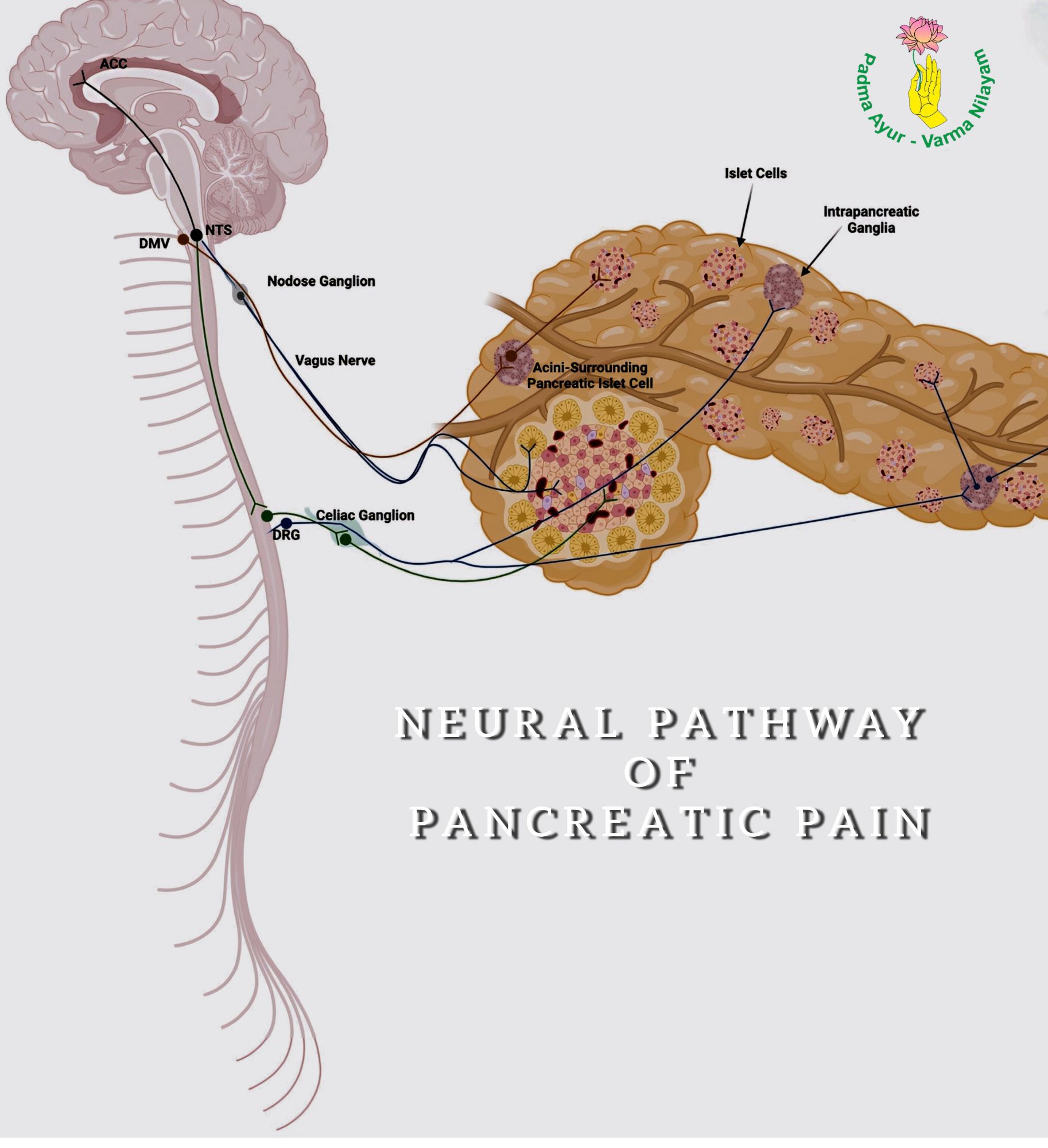
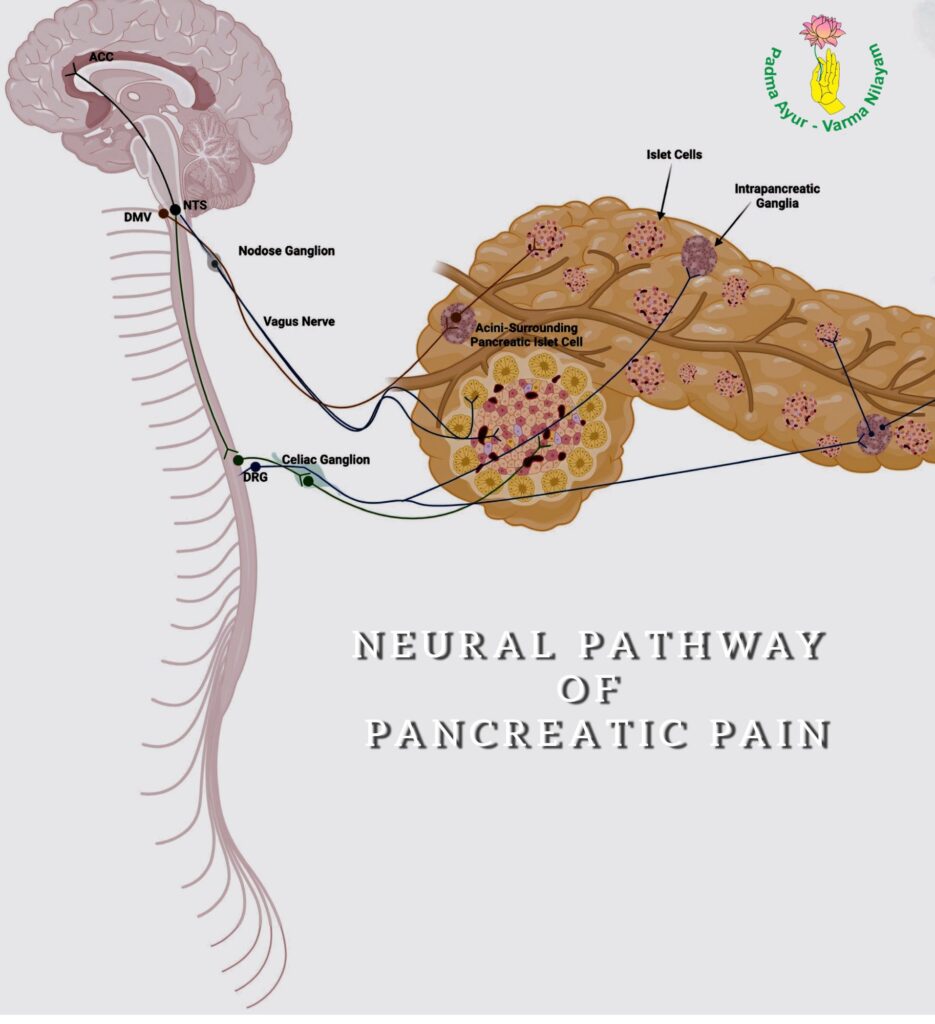
The lesser and greater splanchnic nerves (T5–T11) converge at the celiac plexus, innervating the pancreas, liver, stomach, and upper GI tract.
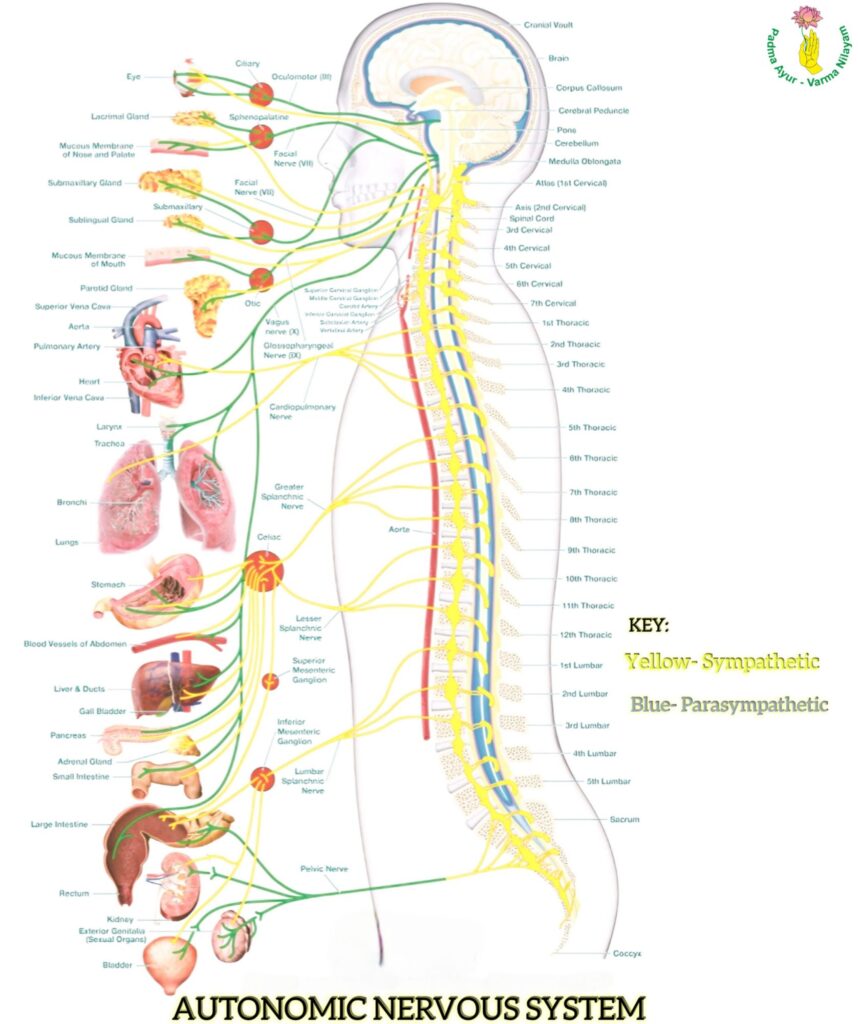
Sthanika Vasti, via moist heat and medicated oils, likely modulates afferent/efferent neural signals through these pathways — influencing pain perception, pancreatic endocrine function, and autonomic balance.
Scientific Mechanisms:
Glycemic Control: Heat therapy may induce HSP70 (heat shock protein), boosting insulin signaling (AKT, AMPK phosphorylation), reducing resistance, and enhancing glucose uptake.
Pain Relief: Analogous to neurolytic celiac plexus block, Sthanika Vasti may inhibit nociceptive transmission via splanchnic nerves, supported by anti-inflammatory compounds in Ayurvedic oils.
Therapeutic Actions Summarized:
- Corrects aggravated sthanika vata; clears srotas.
- Marma stimulation at T10 influences neuro-metabolic pathways.
- Heat-induced svedana enhances agni, drug penetration.
- Medicated oil (Hasa Varma thailam) offers lekhana (scraping), rukshana (drying), vata-shamana properties.
Conclusion:
Targeted Sthanika Vasti over T8-T11 demonstrated rapid, multi-dimensional improvements in both advanced pancreatic cancer pain and uncontrolled diabetes. The therapy operates through neuro-visceral modulation, srotas clearance, marma activation, and enhanced metabolic fire—reflecting the power and sophistication of classical Ayurvedic intervention for complex clinical challenges.